What Is a Poplar Tree? — Poplar Meaning and Definition
The poplar tree meaning: a poplar is any member of the genus Populus in the family Salicaceae — the same family as willows. The word "poplar" comes from the Latin populus, which was the Roman name for these trees. The genus Populus comprises approximately 25-35 species of fast-growing deciduous trees native to the Northern Hemisphere, found across North America, Europe, and Asia.
What is poplar? Poplars are defined by several consistent features: extremely fast growth rate, leaves with flattened stalks that cause trembling in the breeze, cotton-like seeds dispersed by wind in early summer, pale gray-green to white bark, and a tendency to produce root suckers that spread the tree vegetatively. They are among the most widely planted trees in the world for timber, biomass energy, windbreaks, and ornamental use. Upload a photo to our AI Tree Identifier to identify any poplar species instantly.
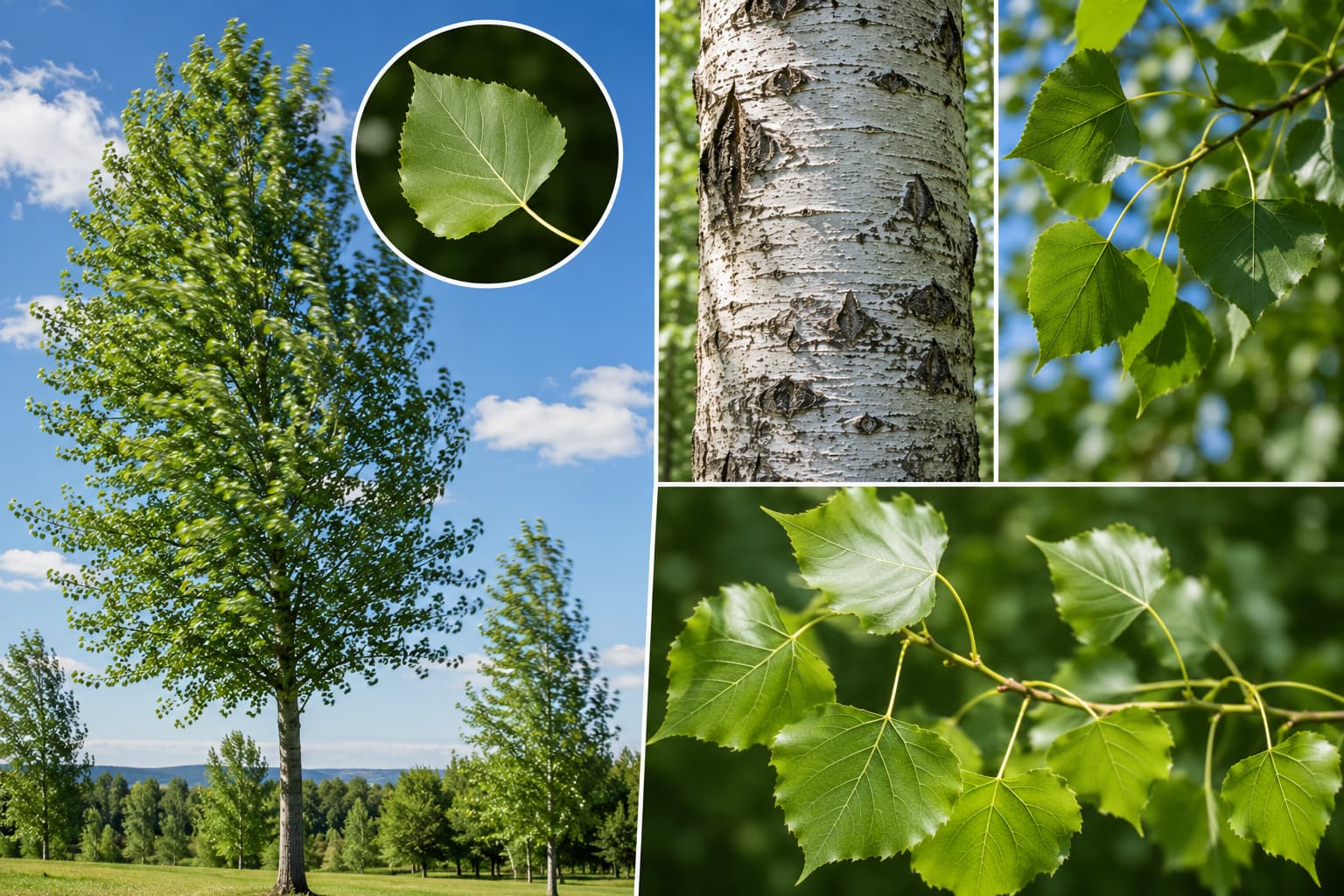
Poplar Tree Identification — Key Features
Identifying a tree as a poplar (Populus species) is straightforward once you know the key features. The most reliable poplar identification features are the flattened leaf stalk, the triangular leaf shape, and the pale smooth bark — together these features identify any tree as a poplar with high confidence.
The flattened leaf stalk (petiole) is the single most distinctive poplar feature. Hold a poplar leaf and look at the stalk where it connects to the blade — rather than being round in cross-section like most tree leaf stalks, the poplar leaf stalk is flattened at right angles to the leaf blade. This means the stalk is wide from side to side but very thin from front to back. This flattening means the leaf responds to even tiny air currents by rotating and trembling — giving poplars and aspens their characteristic "quaking" motion. No other common tree has this distinctive trembling habit in calm conditions.
The bark of young poplar trees is typically smooth and pale — gray-green, cream-white, or greenish — before developing furrows with age. White Poplar (Populus alba) has the most distinctive bark — brilliant white, resembling birch bark, with distinctive dark diamond-shaped marks. Quaking Aspen also has smooth creamy-white bark. Lombardy Poplar bark is gray-green when young. Cottonwood bark becomes deeply furrowed gray-brown on mature trees.
Poplar Tree Leaves — How to Identify Poplar Leaves
Poplar leaves vary significantly between species, but several features are consistent across the genus. Understanding poplar leaf features helps distinguish different types of poplar trees and separate poplars from similar-looking trees.
The most distinctive poplar feature — the leaf stalk (petiole) is flattened at right angles to the leaf blade, causing leaves to tremble and quake in the slightest breeze. This is why aspen is called "quaking aspen."
Most true poplars have triangular to diamond-shaped leaves — broader at the base, tapering to a pointed tip. Cottonwood has the most dramatically triangular leaves. White Poplar is the exception with maple-like lobed leaves.
Poplar leaves have toothed or scalloped margins. Cottonwood and Eastern Poplar have coarser teeth while Aspen has fine rounded teeth. The number and size of teeth helps distinguish between species.
All poplar leaves are alternate on the twig — one leaf per node alternating sides. This is consistent across all Populus species and is a useful confirmation feature.
White Poplar and Silver Poplar have brilliant white woolly undersides — when the wind blows, the leaves flash silver-white dramatically. This feature immediately identifies White Poplar from a distance.
Poplar leaf size varies enormously between species — from 3cm in Aspen to 15cm+ in Cottonwood and Hybrid Poplar. Large leaves generally indicate fast-growing species like Cottonwood or Hybrid Poplar.
Types of Poplar Trees — 8 Major Species
The following profiles cover the most important poplar species and types, including true poplars (Populus species) and the misnamed Tulip Poplar (Yellow Poplar), with full identification details for each.
#1 Lombardy Poplar
Populus nigra "Italica" · Origin Italy — worldwide planted
#2 White Poplar
Populus alba · Europe, Asia (widely naturalized)
#3 Hybrid Poplar
Populus deltoides × nigra · Cultivated worldwide
#4 Eastern Cottonwood
Populus deltoides · Eastern & Central North America
#5 Quaking Aspen
Populus tremuloides · North America (most widespread NA tree)
#6 Tulip Poplar / Yellow Poplar
Liriodendron tulipifera · Eastern North America
#7 Silver Poplar
Populus alba "Nivea" · Cultivar — worldwide
#8 Black Poplar
Populus nigra · Europe & Central Asia
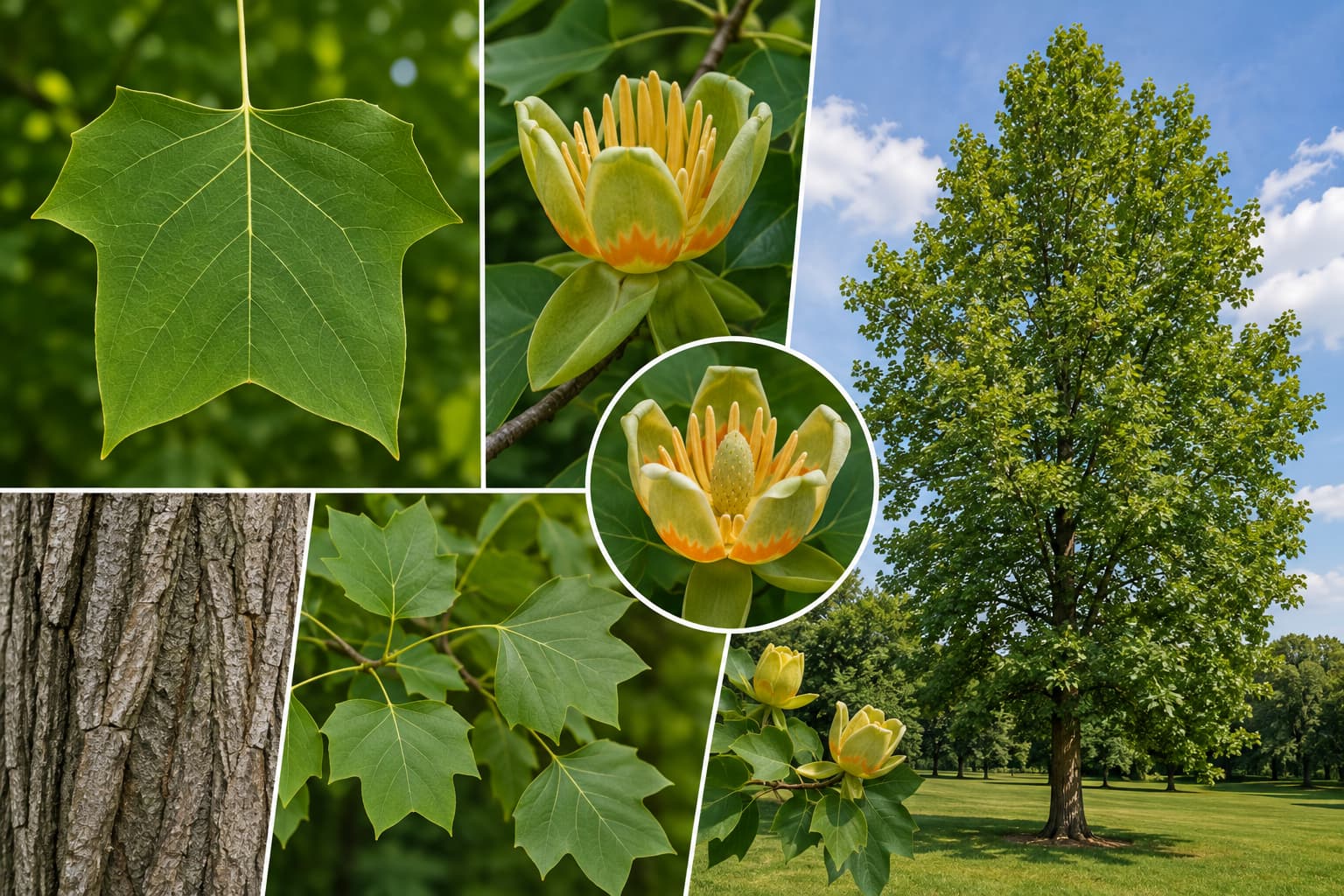
Tulip Poplar vs Tulip Tree — What Is the Difference?
One of the most common questions about poplars is the relationship between "Tulip Poplar" and "Tulip Tree" — and whether either is a true poplar. The answer is: Tulip Poplar (Liriodendron tulipifera) and Tulip Tree are the same species, known by both common names interchangeably. It is also called Yellow Poplar, referring to the yellowish color of its wood.
However, Tulip Poplar/Tulip Tree is not a true poplar. It belongs to the family Magnoliaceae (the magnolia family), not to the genus Populus. Early American settlers called it "poplar" because the wood resembled poplar wood in weight and texture, but botanically it is completely unrelated. The "tulip" part of the name refers to the tree's large tulip-shaped flowers — orange and green, produced in late spring — which are unmistakable and beautiful.
The Tulip Poplar leaf is one of the most distinctive of any North American tree: four-lobed, with two main lobes at the sides and two smaller lobes at the base, and a completely flat or notched tip (no point). No other common tree has this distinctive saddle-shaped 4-lobed leaf. The tulip poplar growth rate is fast — 60-90cm per year — making it one of the faster-growing large hardwoods in eastern North America.
White Poplar (Populus alba) — Complete Guide
White Poplar (Populus alba) is one of the most visually distinctive of all poplar species, immediately identifiable by two features: its brilliant white to gray-white bark, and its leaves with a striking silvery-white woolly underside that flashes in the wind. When a breeze stirs through a White Poplar, the leaves rotate on their flattened stalks to reveal the white undersides, creating a shimmering silver-white display unlike any other common tree.
Populus alba leaves are unusual among poplars in being variably lobed — somewhat resembling small maple leaves — rather than the typical triangular shape of most poplars. The upper surface is dark green while the underside is covered in dense white woolly hairs that give it its silvery appearance. Populus alba bark is distinctive — white to light gray with dark diamond-shaped lenticels, somewhat resembling birch bark but developing darker, rougher furrows at the base of mature trees.
White Poplar spreads aggressively by root suckers — the tree sends up new shoots from its root system, sometimes many meters from the main trunk, eventually forming colonies. This suckering habit can be a management challenge in gardens but is useful for erosion control on slopes. In the UK, Populus alba (white poplar UK) is widely naturalized, particularly near coasts and in disturbed ground, and is considered an established non-native species.
Hybrid Poplar Trees — Fast Growing Trees for Timber and Screening
Hybrid poplar trees are artificial crosses between two or more Populus species, developed to combine the best characteristics of multiple species — typically maximum growth rate, disease resistance, and wood quality. The most common hybrid poplars are crosses between Eastern Cottonwood (Populus deltoides) and European Black Poplar (Populus nigra), producing the Populus × canadensis hybrids that are among the fastest growing trees in the world.
Hybrid poplar trees grow 1.8-3 meters per year under ideal conditions — up to 20 meters in just 7-10 years. This extraordinary growth rate makes hybrid poplars the preferred choice for commercial timber plantations (especially in Europe), biomass energy production, phytoremediation (cleaning contaminated soils), and rapid privacy screening. Hybrid poplars for sale are widely available from specialist nurseries in named cultivars including 'Robusta', 'Ghoy', 'Beaupré', and many others.
Fertilizer for poplar trees significantly boosts growth in hybrid plantations — nitrogen-rich fertilizers applied in spring can increase annual growth by 20-40% above unfertilized controls. Poplar tree fertilizer recommendations typically call for balanced NPK (nitrogen-phosphorus-potassium) fertilizer applied at bud break in early spring, with additional nitrogen applications through the growing season for maximum timber production.
Poplar Tree Bark — Identification Guide
Poplar bark varies significantly between species and tree age, but several features help identify poplars from their bark alone. Young poplar bark of most species is smooth and pale — gray-green, cream-white, or greenish-gray — with small diamond-shaped lenticels (breathing pores) visible on the smooth surface. This smooth pale young bark is characteristic of the genus and distinguishes young poplars from most other trees of similar size.
With age, poplar bark develops in different ways depending on species. Cottonwood bark becomes very deeply furrowed gray-brown — old cottonwood trunks develop massive interlacing ridges and furrows resembling deeply furrowed oak bark. Lombardy Poplar bark remains relatively smooth gray-green on the upper trunk but develops rough dark furrows at the base. Black Poplar (Populus nigra) develops a massive gnarled trunk with distinctive large burrs and bulging irregular ridges — the most characterful bark of any poplar. For detailed bark identification techniques, see our complete bark identification guide.
Poplar Wood — Uses and Properties
What is poplar wood? Poplar wood refers to the timber produced by Populus species — a lightweight, fine-grained hardwood that is soft relative to other hardwoods but stronger than many softwoods. True poplar wood (from Populus species) and Yellow Poplar wood (from Tulip Poplar, Liriodendron tulipifera) are both commercially important but differ in properties.
Populus poplar wood is very lightweight, easy to work, and dries quickly — widely used for plywood core, pallet wood, paper pulp, and packaging. Yellow Poplar wood (Tulip Poplar wood) is denser and stronger, a premium wood for furniture making, cabinetry, interior trim, and millwork. Yellow Poplar is the preferred "poplar" at lumber yards — when you buy "poplar" at a home improvement store, it is almost always Yellow Poplar (Liriodendron tulipifera) rather than true Populus poplar.
Is Poplar Good for Firewood?
Is poplar trees good for firewood? Poplar wood burns adequately but is not considered premium firewood. Poplar produces moderate heat — approximately 13-15 million BTUs per cord depending on species — compared to premium firewoods like oak (24 million BTU) or hickory (28 million BTU). Poplar burns faster than dense hardwoods and requires more frequent reloading of the firebox.
The main advantage of poplar as firewood is that it seasons (dries) very quickly — typically 6-12 months compared to 1-2 years for oak. Its low density means it dries easily and ignites readily, making it useful as kindling or for quick fires. Poplar firewood produces moderate smoke and some creosote, so regular chimney cleaning is advisable. For a wood stove or fireplace where long-lasting heat is desired, mix poplar with denser hardwoods like oak or ash rather than using it alone.
Fertilizer for Poplar Trees — Growing Tips
Poplar tree fertilizer requirements vary by purpose — ornamental trees in garden settings generally require little supplemental fertilization if planted in average soils, while commercial hybrid poplar plantations benefit significantly from fertilization to maximize timber yield.
For garden poplars and hybrid poplars used for screening, apply a balanced slow-release granular fertilizer (10-10-10 NPK) in early spring as growth begins. Young trees (1-5 years) benefit most from fertilization, which can significantly boost the already impressive poplar tree growth rate. Established mature poplars generally need little to no fertilization unless growing in poor or depleted soils. Avoid over-fertilizing with nitrogen, which can promote excessive soft growth susceptible to wind damage and disease.
Frequently Asked Questions — Poplar Trees
What is a poplar tree?
A poplar is any member of the genus Populus — fast-growing deciduous trees with flattened leaf stalks causing leaves to tremble in the breeze, pale bark, and cotton-like wind-dispersed seeds. About 25-35 species exist worldwide. Not to be confused with Tulip Poplar which is actually a magnolia family tree.
What is the fastest growing poplar tree?
Hybrid poplars (Populus deltoides × nigra crosses) are the fastest, growing 1.8-3 meters per year. Lombardy Poplar grows up to 2 meters per year. Eastern Cottonwood grows 1.5-2 meters per year. Hybrid poplars are widely planted for rapid timber production and screening.
What is Populus alba — White Poplar?
Populus alba is White Poplar — identified by brilliant white bark and leaves with silvery-white woolly undersides that flash in the wind. Spreads by root suckers. Widely naturalized in UK and worldwide. One of the most visually distinctive of all poplars.
What is tulip poplar and is it a real poplar?
Tulip Poplar (Liriodendron tulipifera) is NOT a true poplar — it belongs to the magnolia family. Also called Yellow Poplar or Tulip Tree. Identified by unique 4-lobed leaves with flat top and tulip-shaped orange-green spring flowers. One of the tallest eastern hardwoods (30-50m).
What is Lombardy Poplar tree?
Lombardy Poplar (Populus nigra "Italica") has an extremely narrow columnar form — a tall spire silhouette unlike any other tree. Grows up to 2m/year. Widely used for windbreaks and screening. Short-lived (15-25 years). All trees are male clones.
Is poplar wood good for firewood?
Poplar firewood produces moderate heat (13-15 million BTU/cord) — less than oak or hickory. It seasons quickly (6-12 months), ignites easily, and is useful as kindling or for mixing with denser hardwoods. Not ideal as a primary firewood for cold climates.
What is poplar wood used for?
Poplar wood is used for furniture (especially painted pieces), plywood, pallets, paper pulp, and interior trim. Yellow Poplar (Tulip Poplar) is the premium woodworking poplar used for cabinetry and furniture. Hybrid poplar is grown for timber and biomass energy.
Identify Your Poplar Tree Instantly
Found a poplar tree and want to confirm the exact species? Upload a photo to our free AI Tree Identifier for instant identification. The AI identifies all major poplar species — Lombardy Poplar, White Poplar, Cottonwood, Quaking Aspen, Tulip Poplar, Hybrid Poplar, and more — from leaf, bark, or full-tree photos.
For leaf identification, our Leaf Identifier analyzes the distinctive flattened stalk, triangular shape, and other poplar leaf features. Related guides: Beech Tree Guide, Willow Tree Guide, Trees With Heart Shaped Leaves, Oak Tree ID Guide, Maple Tree Guide, Tree ID by Bark.
Species tools: Oak Tree Identifier, Maple Tree Identifier, Elm Tree Identifier, Fruit Tree Identifier, Birch Tree Identifier, Pine Tree Identifier.