What Is Linden? — Linden Definition and Meaning
Linden definition: linden is the North American common name for trees of the genus Tilia in the family Malvaceae (formerly placed in Tiliaceae). The linden meaning comes from Old English lind — a word that also gives us the British common name "lime tree" for the same genus. Define linden simply as "a fragrant-flowering hardwood tree with heart-shaped leaves and distinctive strap-like flower bracts." The linden genus (Tilia) comprises approximately 20-45 species (taxonomy varies) of large deciduous trees native to temperate regions of Europe, Asia, and North America.
The lindon tree (alternate spelling) or lipa tree (the Slavic name, widely used in Poland, Czech Republic, Slovakia, and other Slavic countries where linden is culturally very significant) are all names for the same trees. In Germany, the linden tree (Lindenbaum) has deep cultural significance in folk songs, literature, and as a meeting-place tree in village centers. Upload a photo to our AI Tree Identifier to identify any linden species from a photo instantly.
Linden Tree Identification — Key Features
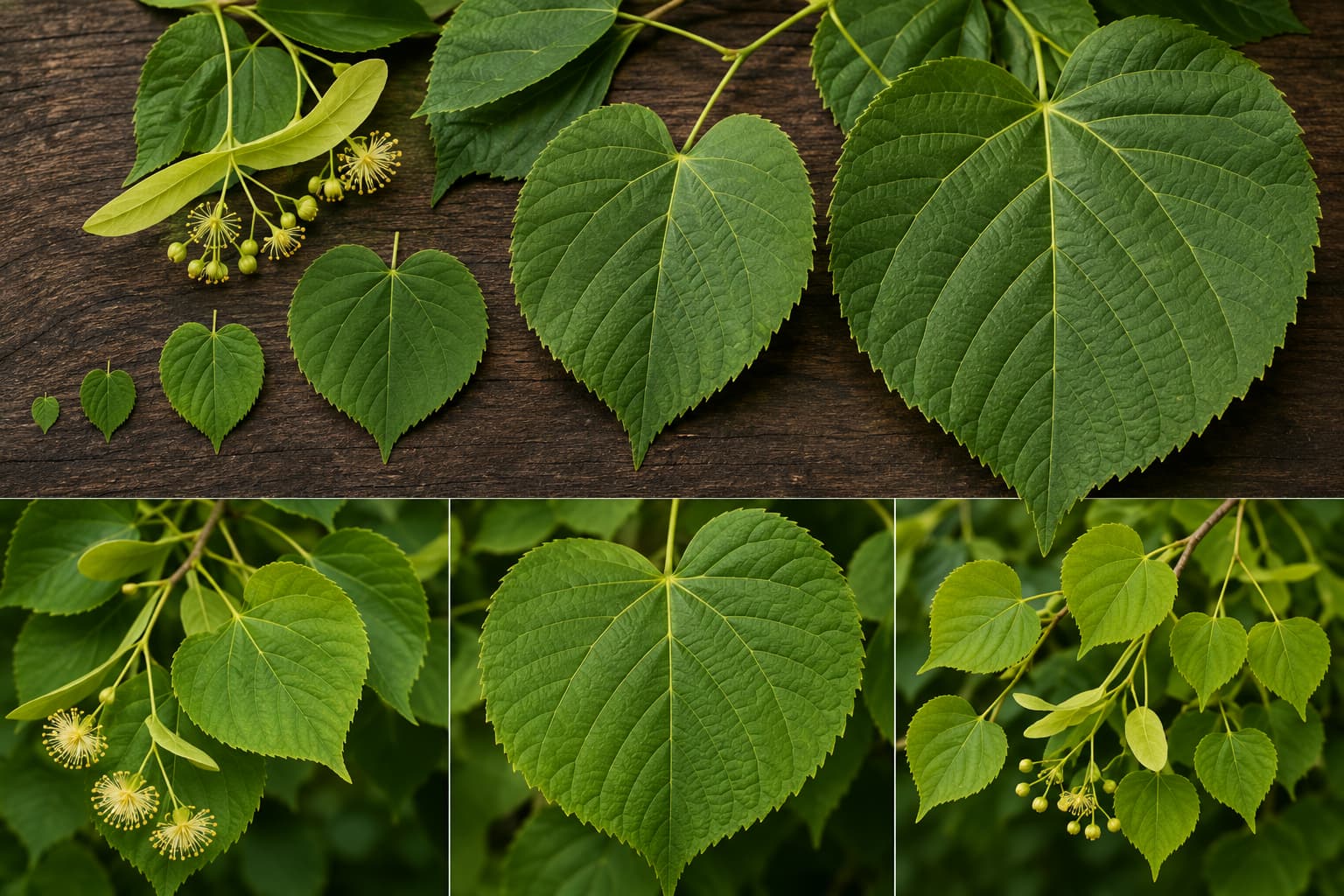
Linden tree identification is highly reliable due to several unique features found in no other common tree. The single most distinctive identification feature is the strap-like bract attached to the flower and fruit clusters — a narrow, elongated leaf-like structure (5-10cm long) from which the cluster of flowers or fruits hangs. This bract is found on no other common tree in North America or Europe and immediately and unmistakably identifies any tree as a linden in both flower and fruit season.
Even fallen linden fruits on the ground are immediately identifiable — small round hard nutlets (5-8mm) attached to the distinctive bract, which drifts down like a little helicopter when the fruit is released. Finding these bract-and-fruit structures on the ground beneath a tree in autumn is one of the most reliable ways to confirm linden identification even without examining the tree closely.
The heart-shaped asymmetric leaf is the most reliable vegetative identification feature. All linden leaves are heart-shaped with toothed margins, but the critical detail is the asymmetric base — one side of the leaf base where it attaches to the stalk is noticeably higher than the other. This asymmetric base is consistent across all Tilia species and distinguishes linden from Redbud (symmetric heart), Catalpa (symmetric heart), and other heart-leaved trees. For more heart-shaped leaf tree identification, see our guide on trees with heart shaped leaves.
Linden Tree Leaves — Complete Identification Guide
Linden leaves are among the most distinctive of any common temperate tree once you know what to look for. The following six features provide complete linden leaf identification.
All linden leaves are heart-shaped (cordate) but with an important distinction — the base is asymmetric, with one side higher than the other. This asymmetric base distinguishes linden from Redbud (symmetric heart) and most other heart-leaved trees. Feel the base — one side is noticeably higher.
Linden leaves have sharply toothed (serrated) margins with pointed teeth that end in a tiny bristle-like point. The teeth are relatively large and uniform. This distinguishes linden from Basswood relatives with entire (smooth) margins.
Leaf size is the fastest way to distinguish linden species: American Basswood leaves are enormous (10-20cm) — biggest of any linden. Little Leaf Linden leaves are small (3-8cm) — hence the name. Silver Linden is intermediate (5-10cm). Measuring a leaf immediately narrows the species.
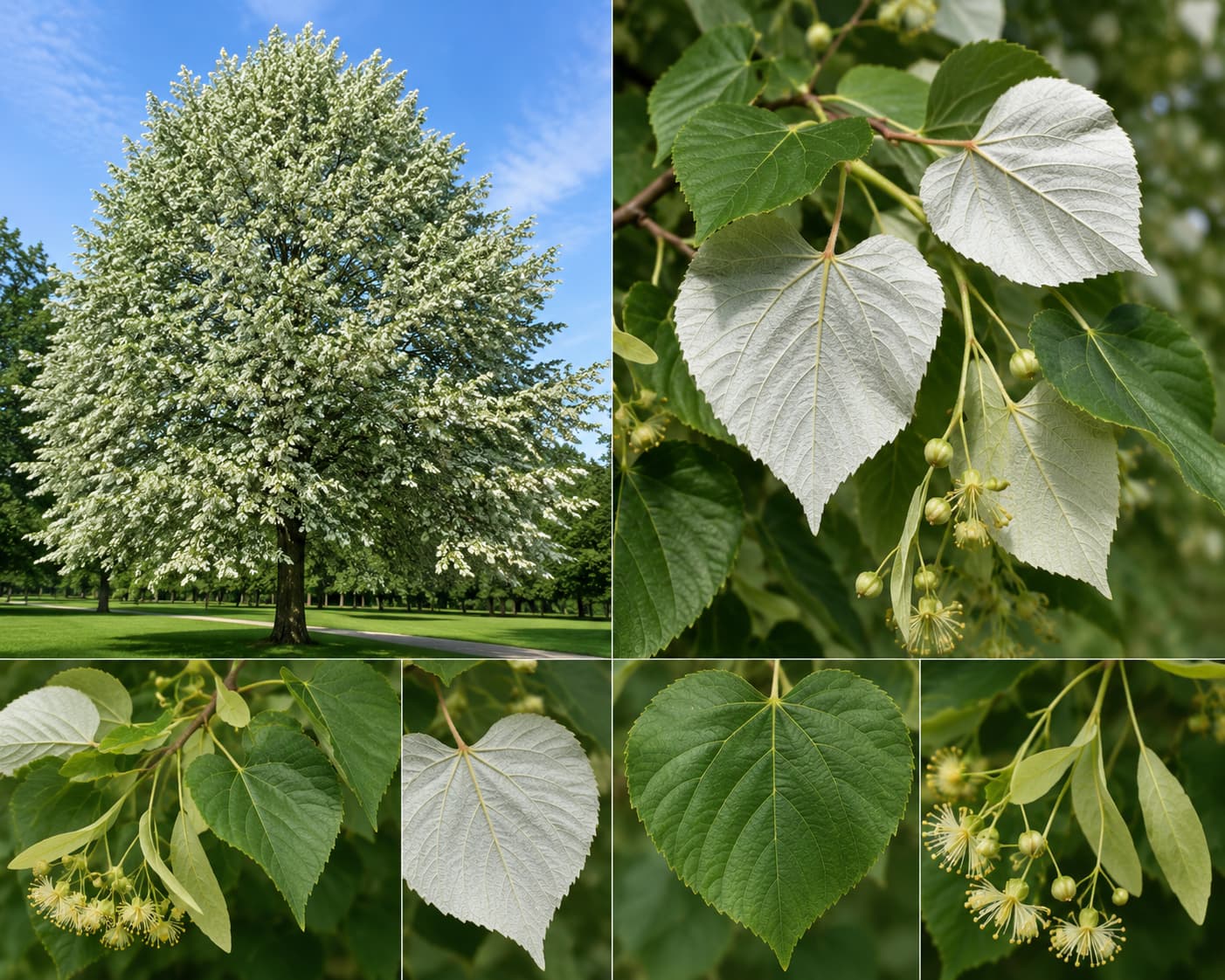
The leaf underside is highly diagnostic. Silver Linden has brilliant silver-white woolly undersides — most striking of any linden. Little Leaf Linden has bluish-green undersides with tufts of orange-brown hairs at vein junctions. American Basswood has pale green undersides with slight hairiness.
All linden leaves are alternate on the twig — one leaf per node alternating sides. Combined with the heart shape and asymmetric base, alternate arrangement confirms the identification as linden rather than opposite-leaved species with similar leaf shapes.
Linden trees turn bright yellow in autumn — a pleasant but not spectacular fall display. The large leaves of American Basswood turn a clear yellow-green before dropping. Little Leaf Linden also turns yellow. The fall color is reliable but not as dramatic as maple or sweetgum.
American Basswood (Tilia americana) — North America's Native Linden
American Basswood (Tilia americana), also called American Linden, is the most important native linden tree of North America and one of the largest and most productive honey trees on the continent. Found throughout eastern North America from New Brunswick south to the Georgia mountains and west to the Dakotas and Nebraska, American Basswood is a dominant component of the northern hardwood and mixed hardwood forests of the Great Lakes region and Appalachians.
American Basswood is immediately distinguished from European lindens by its enormous leaves — 10-20cm long, the largest of any linden species. These large leaves give the tree a lush, tropical-looking canopy in summer and produce prodigious amounts of litter in autumn. The basswood leaf is heart-shaped with the characteristic asymmetric base, sharply toothed margin, and pale to slightly hairy underside. Basswood leaf identification is straightforward — no other common North American tree has heart-shaped leaves this large with an asymmetric base.
American Basswood bark (american basswood bark / basswood bark) on young trees is smooth and gray, developing flat-topped ridges and furrows on mature trees that give it a somewhat rough, interlacing appearance. The inner bark is the famous "bast" — strong, fibrous inner bark that Indigenous peoples of eastern North America used extensively for cordage, rope, baskets, mats, and clothing. The basswood plant name comes directly from this use: "bass" is a corruption of "bast." American basswood tree for sale is widely available at native plant nurseries across eastern North America for use in restoration and wildlife gardens.
Little Leaf Linden (Tilia cordata) — The World's Most Planted Linden
Little Leaf Linden (Tilia cordata), also called Small Leaved Linden, Small Leaf Linden Tree, or Small Leaved Lime, is the most widely planted linden species in the world for ornamental and street use. Native to Europe from Britain to Russia, Tilia cordata is named for its heart-shaped (cordate) leaves — but the defining feature is that these heart-shaped leaves are much smaller (3-8cm) than those of the Large Leaved Linden or American Basswood.
Tilia cordata tree is one of the longest-lived temperate trees in Europe — several specimens exceed 1000 years in age, and some European Tilia cordata trees are estimated at 1500-2000 years old, making them among the oldest living organisms in Europe. The linden tree canopy of old Tilia cordata trees develops a massive spreading crown that can span 20-30 meters in diameter over centuries of growth. These ancient linden trees have been meeting places, sacred sites, and village gathering points throughout European history.
Tilia cordata linden tree is the preferred species for street planting because it tolerates urban conditions, pollution, and pruning better than most large trees, while providing excellent shade, autumn color, and summer fragrance. The tiliae (plural of Tilia) of European cities and parks include thousands of Tilia cordata planted over centuries. The basswood leaf comparison with Tilia cordata leaves is immediately apparent — American Basswood leaves dwarf the small neat leaves of Little Leaf Linden.
Linden Flower — Fragrance, Ecology, and Medicinal Uses
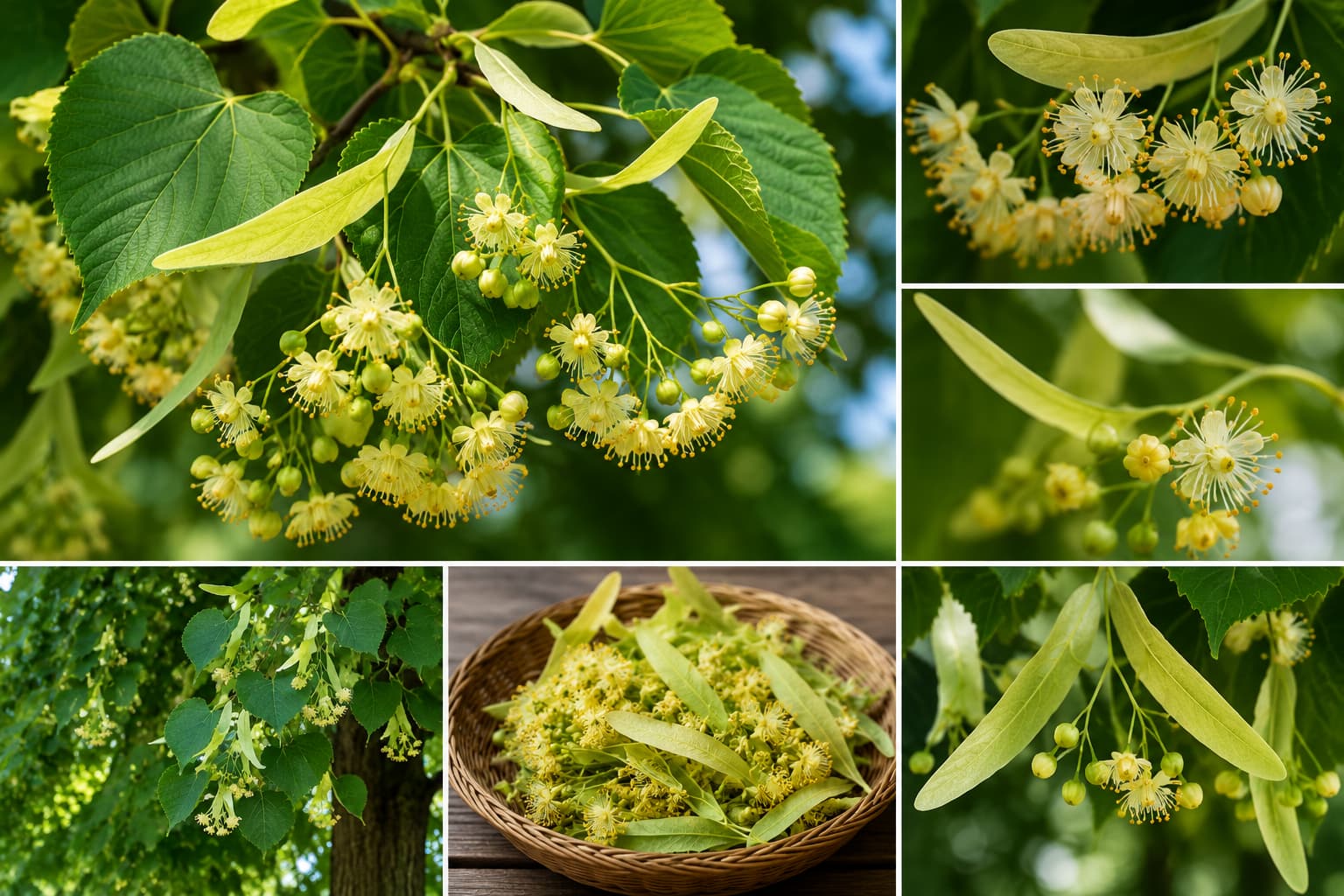
Linden flowers (linden tree flowers / linden tree blossoms) are among the most fragrant of all temperate tree flowers — producing an intensely sweet, complex, honey-like fragrance that can perfume the air for hundreds of meters around a flowering linden. The linden tree smell at bloom time (June-July in the Northern Hemisphere) is one of the most beloved natural fragrances in the world, celebrated in European poetry and literature for centuries. Walking past a street lined with flowering lindens is an unforgettable olfactory experience.
Linden flowers are creamy-yellow to white, small (6-8mm), with five petals, produced in clusters of 5-10 attached to the distinctive strap-like bract. They are produced in enormous quantities — a large linden tree can produce hundreds of thousands of individual flowers in a single bloom season. The flowers attract extraordinary numbers of bees and other pollinators, making linden one of the most important honey plants in both Europe and North America.
Linden honey is prized worldwide for its distinctive flavor — light-colored, with a fresh, minty, slightly woody character that reflects the unique chemistry of linden nectar. In many European countries, linden honey commands premium prices. In North America, basswood honey is the classic summer honey of the Great Lakes and New England regions. The importance of linden flowers to bees is difficult to overstate — in some regions, the linden bloom provides more nectar than all other flowers combined during its brief 2-3 week flowering period.
Silver Linden (Tilia tomentosa) flowers are so rich in narcotic compounds (including farnesol) that bees visiting them can become intoxicated or even die — a phenomenon well-documented in European cities where Silver Linden street trees are planted. Thousands of dead and disoriented bees can sometimes be found beneath flowering Silver Lindens, leading some municipalities to limit Silver Linden planting.
Linden Tea — Properties and Benefits
Linden tea (linden flower tea, linden lilia tea / linden tilia tea, tilleul in French) is one of Europe's most traditional herbal teas, made from dried linden flowers (and sometimes leaves and bracts). The flowers are harvested at peak bloom, dried gently, and brewed as an infusion. Linden tea has a distinctive flavor — delicately sweet and floral, with a slight honey-like character that reflects the intense fragrance of the fresh flowers.
Linden tea properties include several well-documented medicinal effects. The most reliable linden flower benefits are mild sedative and anxiolytic effects — linden tea is traditionally drunk before bedtime to promote sleep and reduce anxiety. Clinical studies have confirmed that flavonoid compounds in linden flowers (particularly quercetin, kaempferol, and their glycosides) have genuine calming effects. Linden tea is considered safe for most people including children and the elderly, and is recommended by many European herbal medicine traditions for nervous anxiety, insomnia, and stress.
Additional linden tea properties include anti-inflammatory effects (beneficial for respiratory infections and coughs), diaphoretic activity (promotes sweating, helpful during fever), and mild digestive support. Linden tea properties make it a versatile and gentle herbal medicine with a long safety record across European traditional medicine systems. The tea can be made from flowers alone, or combined with leaves and the distinctive strap-like bract for a fuller flavor. Linden tree tea is widely sold commercially as a packaged herbal tea.
Types of Linden Trees — Complete Species Guide
The linden tree varieties available range from native forest trees to refined ornamental cultivars. The following profiles cover all major types of linden trees with identification details and growing information.
#1 American Basswood / American Linden
Tilia americana · Eastern North America
#2 Little Leaf Linden / Small Leaved Linden
Tilia cordata · Europe (widely planted worldwide)
#3 Silver Linden
Tilia tomentosa · SE Europe & SW Asia (widely planted)
#4 Large Leaved Linden / Lime
Tilia platyphyllos · Central & Southern Europe
#5 Redmond Linden
Tilia americana "Redmond" · Cultivar — North America
#6 Boulevard Linden / Greenspire
Tilia cordata "Greenspire" · Cultivar — worldwide
Linden Wood — Uses and Properties
What is linden wood (basswood wood)? Linden wood (basswood in North America) is a fine-grained, lightweight, and very workable hardwood prized by woodworkers and craftspeople for its exceptional carving properties. Linden wood is creamy-white to pale yellow, straight-grained, with a fine uniform texture that carves cleanly in any direction — making it the preferred wood for hand carving across Europe and North America for centuries.
Linden wood / basswood has been the traditional material for European woodcarving since the Middle Ages — Grinling Gibbons, the greatest English woodcarver of the 17th century, worked exclusively in linden (lime wood). German folk carving traditions from Bavaria and the Black Forest use linden wood for religious figurines, Christmas decorations, and folk art objects. In North America, basswood is the standard wood for decoy carving, folk art, and beginner woodcarving due to its softness and workability.
Beyond carving, linden wood is used for piano soundboards (especially in Central and Eastern Europe), guitar tops, furniture components, turned objects, small boxes and containers, and beehive bodies (the wood is neutral-tasting and odorless, ideal for beekeeping equipment). Linden charcoal was historically used as drawing charcoal by artists and in gunpowder manufacture. Basswood trees for sale are available for planting as shade trees and wildlife habitat trees across eastern North America.
Linden Tree Bark — American Basswood Bark Identification
American Basswood bark changes dramatically with tree age. Young American Basswood bark is smooth and gray, closely resembling young beech bark from a distance. With age, the bark develops flat-topped ridges separated by shallow furrows, creating a distinctive pattern on the lower trunk. Mature American Basswood bark is dark gray with a pattern of interlacing ridges — less deeply furrowed than oak or black locust, but more textured than beech.
The inner bark of American Basswood (basswood bark) is the famous "bast" — fibrous, tough, and extremely useful. Indigenous peoples of eastern North America separated the inner bark into long strips for cordage, braided it into rope, wove it into baskets and mats, and twisted it into fishing nets. The fiber strength of basswood bast is remarkable — strips of inner bark can support considerable weight without breaking. This use of the inner bark is why the tree is called "basswood" (bast-wood) rather than "linden" in most North American contexts. For bark identification tips, see our complete bark identification guide.
Frequently Asked Questions — Linden Trees
How do I identify a linden tree?
Look for heart-shaped leaves with an asymmetric base (one side higher than the other), sharply toothed margins, and the distinctive strap-like bract attached to the flower and fruit clusters. The bract is found on no other common tree and immediately identifies any tree as a linden in flower or fruit season.
What is American Basswood (Tilia americana)?
American Basswood is North America's native linden — a large tree (18-37m) with enormous heart-shaped leaves (10-20cm) much larger than European lindens. "Basswood" comes from the fibrous inner bast bark used by Indigenous peoples for cordage and weaving. Produces intensely fragrant flowers prized for basswood honey.
What is Little Leaf Linden (Tilia cordata)?
Little Leaf Linden (Tilia cordata) is the most widely planted linden worldwide. Native to Europe, it has small heart-shaped leaves (3-8cm) — much smaller than American Basswood. Can live 1000+ years. Most popular street tree cultivar is Greenspire Linden (Tilia cordata "Greenspire").
What are linden tree flowers and what do they smell like?
Linden flowers are small creamy-yellow to white flowers in clusters attached to a unique strap-like bract. They bloom in June-July and have an intensely sweet honey-like fragrance that perfumes the air for hundreds of meters. The linden tree smell at bloom is one of the most distinctive natural fragrances in the world.
What is linden tea and what are its benefits?
Linden tea is an herbal tea made from dried linden flowers. Linden tea benefits include mild sedative and anxiolytic effects (promotes sleep, reduces anxiety), anti-inflammatory properties, respiratory support, and diaphoretic effects (helpful during fever). Safe for most people including children. Widely used in European herbal medicine.
What is the difference between linden and lime tree?
Linden and lime tree are different names for the same trees (Tilia species). In North America they are called linden or basswood. In Britain they are called lime trees — completely unrelated to citrus lime. "Lipa tree" is the Slavic name for the same genus.
What is Redmond Linden tree?
Redmond Linden (Tilia americana "Redmond") is a popular cultivar of American Basswood with a uniform pyramidal form for formal landscapes. American Redmond Linden grows 12-18m tall. Greenspire Linden (Tilia cordata "Greenspire") is a similar cultivar of Little Leaf Linden widely used as a boulevard linden.
Identify Your Linden Tree Instantly
Found a linden tree and want to confirm the species? Upload a photo to our free AI Tree Identifier for instant identification. The AI identifies all linden species and cultivars — American Basswood, Little Leaf Linden, Silver Linden, Redmond Linden, Greenspire Linden, and more — from leaf, bark, flower, or full-tree photos.
For leaf identification, our Leaf Identifier analyzes the distinctive asymmetric heart-shaped base and toothed margin of linden leaves. Related guides: Alder Tree Identification, Mulberry Tree Guide, Trees With Heart Shaped Leaves, Beech Tree Guide, Willow Tree Guide, Tree ID by Bark.
Species tools: Oak Tree Identifier, Maple Tree Identifier, Elm Tree Identifier, Birch Tree Identifier, Pine Tree Identifier, Fruit Tree Identifier.